

As a millennial BET was a mainstay in my household.
Rushing home to watch the latest music videos on 106 & Park. Watching College Hill, the original reality show that brought the HBCU experience directly into our homes. Weekends watching HBCU football. BET News and its roster of writers and journalists documenting our communities. I wasn’t even old enough to vote yet, but I vividly remember the 2008 presidential election and watching the network use its platform to emphasize the importance of Black political participation during a historic moment.
Proof that BET not only entertained us, but informed us.
Those television shows, articles, interviews and news segments became a record of us.
In August, BET announced that its redesigned website would move away from the traditional standalone-publisher model and become a video-first experience connecting audiences to BET content across YouTube, social platforms, Paramount+ and BET’s other properties. The company described the new BET.com as a “distribution layer” for content living across those platforms.
BET’s decision to remove decades of written journalism from its website should concern us far beyond nostalgia for what BET used to be.
Our stories aren’t disposable
BET deleting thousands of pages of articles is another reminder that our stories are not just content. They are history.

The Internet Archive says it has preserved almost 200,000 BET articles through the Wayback Machine. BET.com now directs visitors through an Archive link to articles preserved through the Wayback Machine.
If this work is important enough to direct audiences toward an archive, why should preserving decades of Black journalism ultimately depend on an outside entity?
But other reporting has documented that many contributors have lost their work. Behind every article was a writer. Someone who reported that story, invested time with that artist, activist, politician, athlete or community member and contextualized an event happening in our community. Someone wrote the first draft of what eventually became history.
For Black journalists in particular, losing that record carries additional weight because we are already underrepresented in the industry. Pew Research Center (Pew) found that Black journalists represented only 6% of reporting journalists in its 2022 survey. And while Black Americans don’t universally believe their news must come from Black journalists, 40% told Pew that it was extremely or very important for news about race and racial inequality to come from Black journalists.
When opportunities to tell our stories are already limited, we can’t treat the stories that were told as disposable.
What happens to the next generation of storytellers?
Just one day after announcing the redesigned BET.com, BET Digital announced its Community Reporting Initiative, a program intended to recruit local multimedia journalists to tell stories about the people, issues and cultural movements affecting their communities.
There is real opportunity in that idea. More Black storytellers must be equipped to work across video, writing, photography, audio, social media and whatever comes next. The evolution of journalism doesn’t have to mean abandoning what came before it.
But if you’re asking a new generation of journalists to trust you with their stories, there is also a responsibility to show them what will happen to their work when the platform inevitably changes again. Will today’s reporting remain accessible to tomorrow’s researchers, journalists and communities? And what responsibility exists to the people who already helped build BET’s journalistic legacy?
BET’s next generation of community reporters deserves to know their work will be respected and preserved. The journalists whose words helped build BET’s digital presence deserve acknowledgment and continued access to the work they created. And audiences deserve access to the record those journalists helped build.
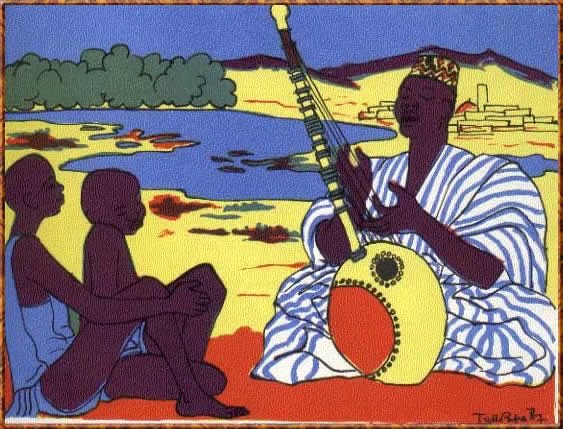
We are the griots now
But this conversation can’t stop at BET. We deserve for corporations and media institutions to do a better job preserving our history. Their decisions should also remind us how dangerous it is to entrust our entire cultural memory to platforms we don’t control.
Instagram is not our archive. YouTube is not our archive. TikTok is not our archive. Substack is not our archive. Even the websites belonging to Black media institutions are not guaranteed to exist in the same form forever.
In an ever-evolving digital world, we are the griots, telling stories for the generations coming after us while trying to preserve the stories, lessons and realities of those who came before us.
BET removing its archive brings to mind the idea of Black erasure, which doesn’t always mean something has ceased to exist entirely. Sometimes it means making it harder to find or harder for the next generation to know it was ever there. An article technically surviving somewhere in the Wayback Machine isn’t the same experience as a young person searching BET and finding decades of Black writers, interviews, criticism, reporting and cultural commentary waiting for them.
I remember teachers pushing us to learn fast math in school because we wouldn’t “always have a calculator in our pocket.” I guess all of our millennial math teachers were proven wrong. Our phones are calculators, calendars, cameras and even mobile banks.
We carry cameras in our pockets that previous generations couldn’t have imagined. We take thousands of photographs and videos, upload them to the cloud and sometimes never look at them again. We have more ways than ever to document our lives and publish them for others to see, but documenting and publishing aren’t necessarily the same as preserving.
An article can live on a website until the website changes. A photograph can sit in a cloud account until someone loses access to it. A story can live with one person until there is no one left who remembers it.
Preservation doesn’t have to begin with an institution. It can begin in our homes, with the people whose stories have shaped our families and the decision to document those stories while we still have the opportunity to hear them firsthand.
One project I intend to create is a video project with my last living grandparent.
I spent the first half of my life growing up in Baltimore with my mom and her side of the family, who immigrated to America from Jamaica. As the eldest grandchild born here, I’ve had the opportunity to grow up watching what my grandmother built with her own hands. She came to this country, worked both inside and outside the home to build a life for her family, became a homeowner, as a mother of 10, watching that family grow to more than 15 grandchildren and now great-grandchildren.
Her story is a piece of our family’s history that deserves to be preserved. I want my younger cousins to know it. I want my future children to know it. And I want the generations who may never have the opportunity to sit in a room with her to still be able to hear her tell it in her own words.
That history probably won’t appear in a textbook, but that doesn’t make it any less historically significant to us.
I want to sit down with my grandmother while I still can. I want to ask the questions, turn on the camera and let her tell her story in her own words. Not just for me, but for my younger cousins, my future children and the generations of our family who haven’t been born yet.
For generations, Black people have found ways to preserve ourselves when institutions either couldn’t or wouldn’t do it for us. Today’s technology gives us tools previous generations never had, but those tools only matter if we use them with the intention of preserving what came before us.
BET’s disappearing archive reminded me that we can’t assume something will always be there simply because it exists today. That applies to a website holding decades of Black journalism, but it also applies to the people sitting across from us who carry decades of our own history.
Because our stories are not just content. They are history, and preserving them starts with making sure the people who come after us can still find them.
Ishmael McKinney is a Baltimore, Maryland native based in Dayton, Ohio where he works as a Digital Marketing Professional, Photographer, Creative, and Writer. Follow him across social media platforms @im_theish and on Substack Ishmael McKinney
For just $5 a month, you’re directly investing in Black writers, Black ideas, and the future of independent Black media. Every subscription helps us commission original stories, platform new voices, and continue building E.N.D. into a living hub for revolutionary thought, culture, education, and community.
Thank you for helping us build something that belongs to us.
new to substack and this was my first read on here. 10/10 archival work is needed now more than ever!!
Thank u for writing about this!
I think as Black journalists, Black artists, & everyday Black citizens we need to move from the premise that there will never be any institution we can trust -- even ones run by Black folks, since their funding/infrastructure is often coming from entities run by White folk. The Black keys to the BET kingdom were handed over to outsiders a long time ago -- (making Robert & Shelia Johnson billionaires). This is just the latest dissection & decimation, at the hands of David Ellison's Skydance Corporation. Look him up & do a deep dive -- he's a problem for a multitude of reasons. The erasure is intentional.
We should all be printing out physical copies of our works & gifting them to family, friends, & community members. We should all be backing up our work to multiple hard drives. And if we're thinking about storage facilities to house our archives, we need to be researching climate/temperature controlled rooms for proper preservation. We need investment & funding where we can get it, but it must come with no strings attached & the control must stay in our hands.
I think we can all begin with printing physical copies of photos, physical copies of articles & research, & backing up videos to dvds or other hardware mediums. We've always been innovative & had to think outside of institutions. Now is no exception. My mom takes her phone to Walgreens every month & prints out physical copies of photos & even snail mails them to family & friends. She's got around 150 photo albums. My mama don't play about the archive & neither should we. Thanks again for writing about & getting us thinking about this.