
I spent last Sunday, November 15th, at Dodger Stadium listening to soul, rap, and everything in between. The crowd seemed to have an easier time with that than the music industry does.
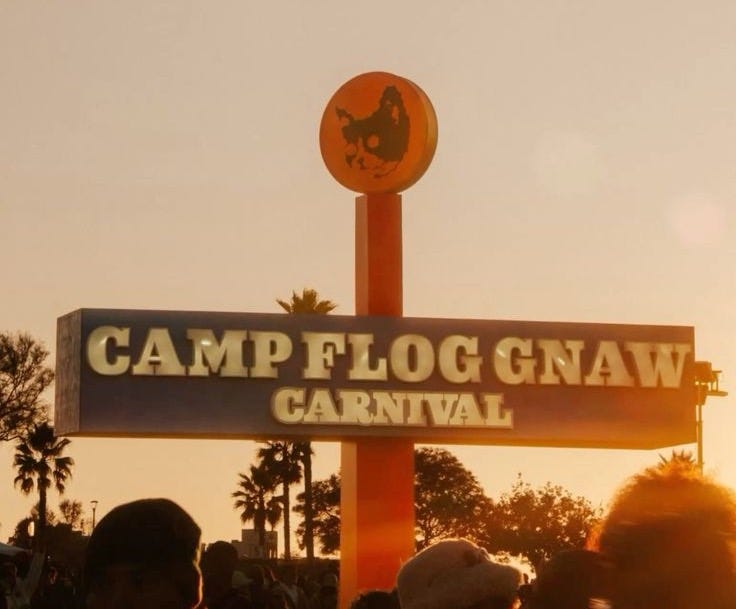
I only went to Camp Flog Gnaw on Sunday because a friend had an extra guest pass. Thank God for that guest pass. It probably skews my review a little. But I had a phenomenal time, and one of the first things I noticed had nothing to do with the lineup. I could get water whenever I needed it.
I’ve been to Coachella, and I remember being younger and standing in line for what felt like 30 minutes just to get something to drink. At Camp Flog Gnaw, I could grab water or something else to drink without having to plan my afternoon around it. When somebody passed out or needed help, I saw the crowd get people’s attention and performers respond. I felt safe enough to settle into the day. And for a festival on the grounds of Dodger Stadium, right there in the middle of Los Angeles, it felt surprisingly easy to get around. I could leave one stage, go hear something else, and still make it back.
Thee Sacred Souls were one of the first acts I caught. I expected a young crowd, and there were plenty of young people there. What stayed with me was the range of ages sharing the same space. Thee Sacred Souls make the kind of music that could remind somebody of the records they grew up with and become somebody else’s favorite new band on the same afternoon. I also caught 54 Ultra, Syd from The Internet, Lupe Fiasco, Latin Mafia, and Isaiah Rashad, then closed out the night with Future. Even just looking at Lupe, Isaiah, and Future on the same bill, you could hear how much ground rap alone covered that day. The lineup trusted that the same person could show up for all of it. I did.
Somewhere between those stages, I started thinking about an argument I make all the time. Pop music doesn’t exist. And when I’m feeling a little less diplomatic about it, pop music is racist.
I can hear the things people mean when they describe a song as pop. A melody you remember after one listen. A hook you can sing before you know the rest of the words. By that definition, I heard pop all day. I heard it in the soul of Thee Sacred Souls and in the way Isaiah Rashad can make a line feel like part of the melody. When I listen to him, I hear jazz in the way he moves around a beat. With SZA, I can hear blues in how she bends a line and country in how plainly she can tell you what happened. So what exactly is the sound that gets an artist called pop? And how often does that answer depend on who’s singing?
By the time the Beatles came along, America already had a commercial popular-music business going back to the sheet-music publishers of Tin Pan Alley. It also had a record industry that, by the 1920s, was marketing Black performers under “race records” and rural white performers under “hillbilly” or “old-time” music, even where the sounds and audiences overlapped. Decades later, the Beatles recorded “Please Mister Postman,” a Motown song the Marvelettes had already taken to No. 1 on the Hot 100. I think about that when the story of modern pop starts with Beatlemania. The Marvelettes already had the sound, the audience, and the number-one record. Who gets remembered as the starting point tells you something about whose music gets treated as everybody’s music.


The person who put Camp Flog Gnaw together has asked a version of that question himself. When Tyler, the Creator won Best Rap Album for IGOR in 2020, he talked about how music made by Black artists keeps getting sent to rap or “urban” categories even when it bends genres. “Why can’t we just be in pop?” he asked. With the new Grammy nominations out, I keep thinking about another name on Sunday’s bill, Steve Lacy. In 2023, Gemini Rights won Best Progressive R&B Album, and “Bad Habit,” a song from that very album, was nominated for Best Pop Solo Performance. Those two descriptions can live on the same record. Tyler’s question is about who gets that freedom, and how often.
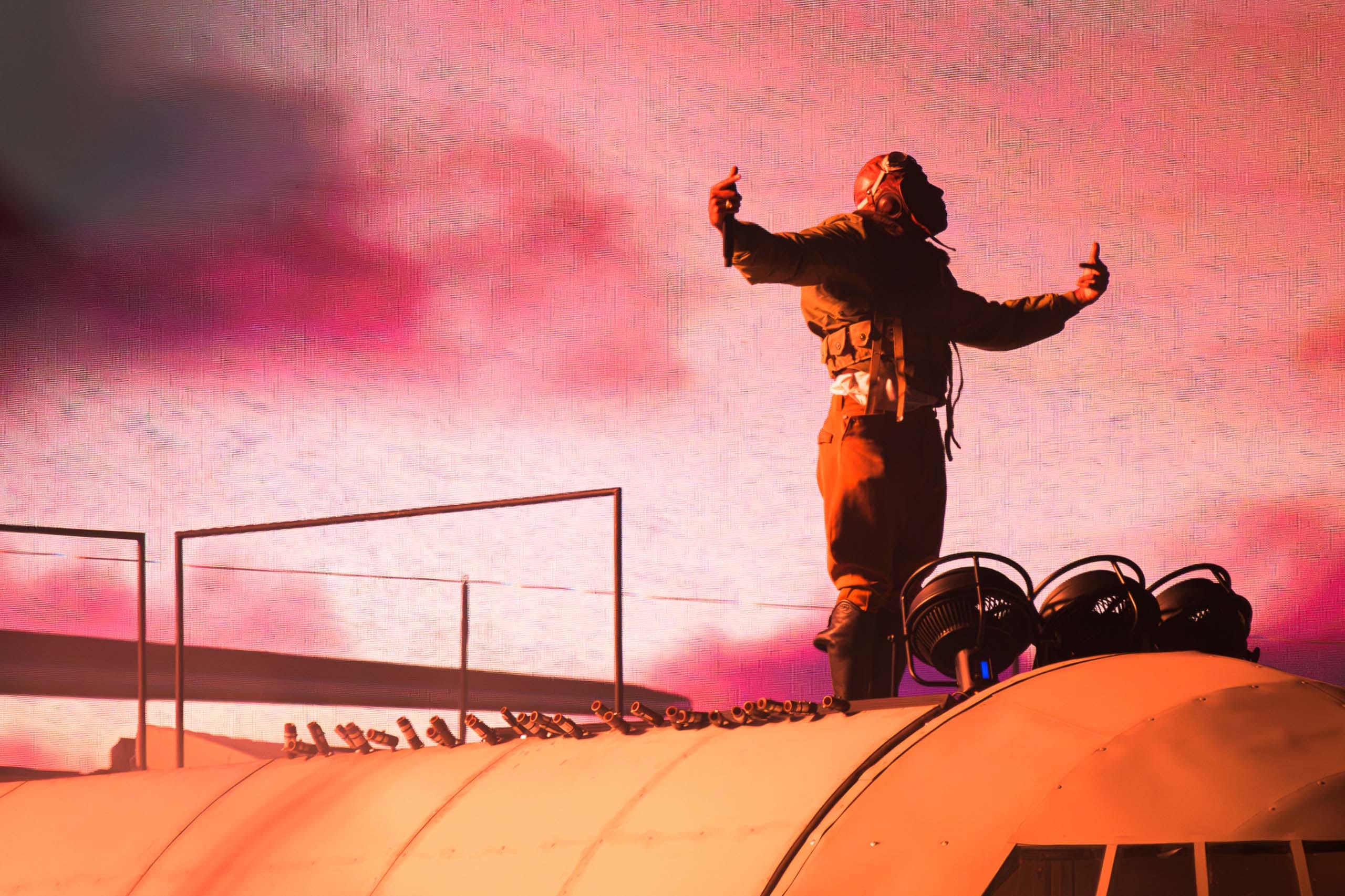
So here’s what I’d suggest. If pop is a genre, tell us what makes a record pop and apply that definition to everybody. If pop means popular music, open up the category to the full range of music people are actually listening to. Either way, start with what you hear in the record and give Black artists the same room to move between categories.
I’d give my Sunday an 8 out of 10. Everybody deserves to experience Camp Flog Gnaw at least once. Go for somebody you love, get some water, and walk over to a stage for somebody you barely know. That freedom to follow your ear is what I liked most about the day. By the time I left Dodger Stadium, the idea that soul, rap, and pop belonged to different crowds felt a lot harder to believe.
For just $5 a month, you’re directly investing in Black writers, Black ideas, and the future of independent Black media. Every subscription helps us commission original stories, platform new voices, and continue building E.N.D. into a living hub for revolutionary thought, culture, education, and community.
Thank you for helping us build something that belongs to us.
I think you missed an Abel Tesfaye-sized hole in your argument. One of the highest charting, highest selling Pop stars of the last 10 years has been a Black Canadian named The Weeknd. He has been there the whole time Tyler has been active. Not to mention, he wrote at least half of Drake's first classic album. Maybe the next question is, why do some Black artists get to reach those heights and others never do? It's also interesting to discuss Pop without mentioning Tinashe, who has been dedicated to the genre for years on end and just now receiving her flowers. She's always known she was a Pop girlie even if the masses were sleep on her. Pop's main feature is commerciality; it can be mass sold, but it does also feature formulaic chord progressions. I think the topic is worth a deeper discussion separate from a concert review.