

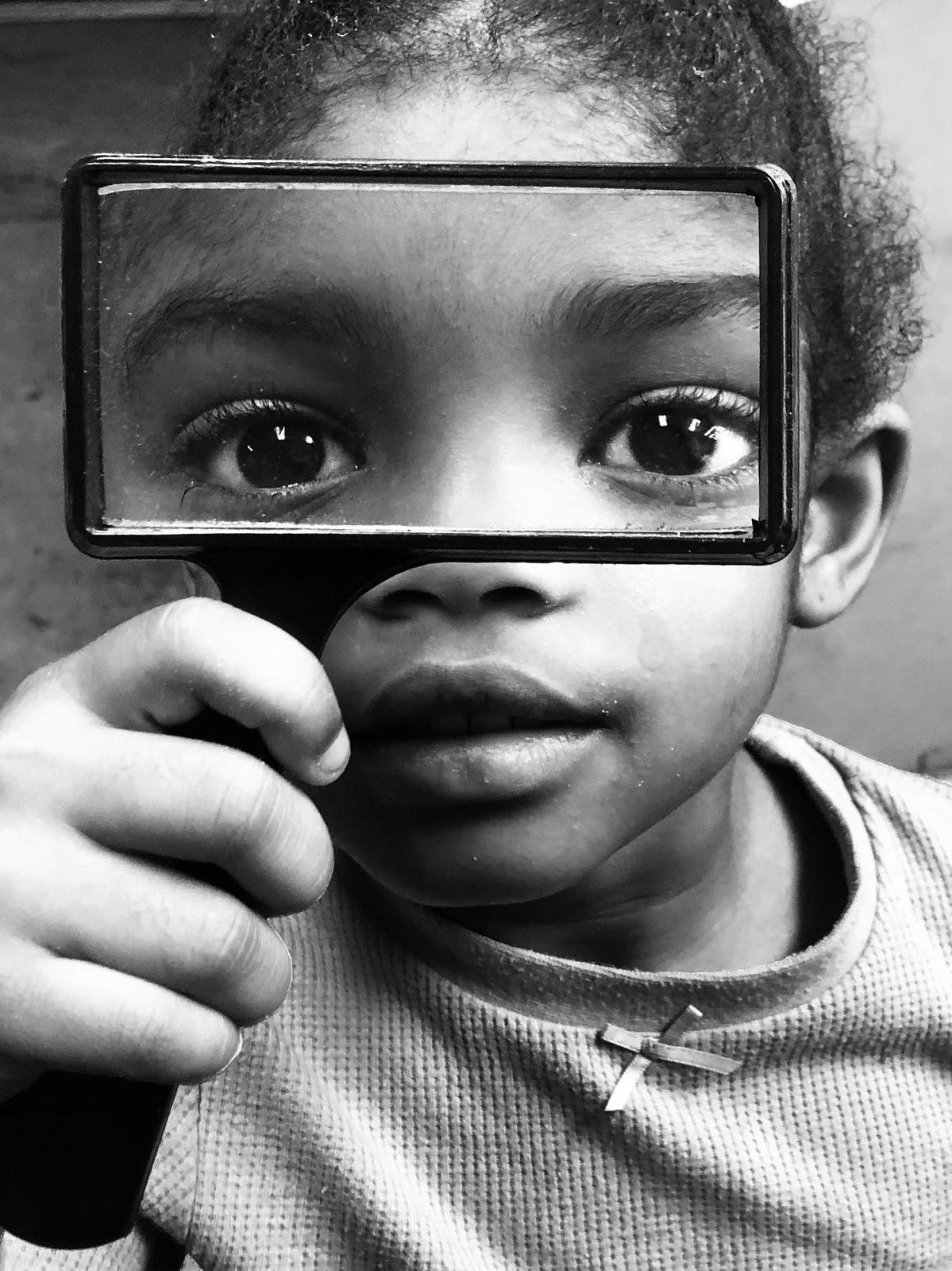
The oldest universities in the world are found on the African continent. Timbuktu is the manuscript. Our heritage is a reminder that Black intellectual life has a history far older than the systems that tried to suppress it. We come from people who studied, debated, preserved knowledge, and passed it on.
Our inheritance includes inquiry. It includes imagination. It includes the refusal to let someone else’s answer settle the matter.
That’s why systems try to beat it, scare it, manipulate it out of us.
As a Black person, I know that too many whys, hows, whos, and whens could get on an adult’s nerves so badly that we’d catch a hand to the mouth, a belt to the ass, or a switch to the hands. “Curiosity killed the cat” was less like a saying and more like a warning.
“Don’t ask again. Don’t question me. Because I said so.”
As a historian, I think about what it means to inherit those warnings. I see them against the backdrop of a country that enslaved our ancestors. A period which their desire to question and understand this new country was responded to with death.
I know our elders taught us about silence and compliance as a method of safety - a way to protect us from individuals who felt our questions meant we thought too highly of ourselves. Those who eventually wanted to bring us down a peg.
That’s why the bomb episode in A Different World stuck out to me so much. I was a college junior on Howard University’s campus 11 years ago when my intellect was treated as a threat worth extinguishing. There was a credible bomb threat on campus and I was almost paralyzed with the fear of dying, simply because others saw the Black brain as dangerous.
But we are dangerous. At least when we’re critically thinking and dissecting everything around us. That’s what questions do, they force us to become active engagers in our own lives.
I became an educator to support a generation of Black children asking questions and seeking answers. To support more Black people who actively sought out truth and from it, created power.
My family nurtured my questions. Who, what, when, where, why, and how were part of my daily practice. The practice of whipping and beating children for questions wasn’t from my own lived experience. If somebody was picking me up, I needed to know: Who am I going with? Where are we going? How are we getting there? And my parents answered me.
Eventually, those questions grew with me. Who decides what’s right or wrong? When did the rules change? How do I become a player in the power game? And they answered me then.
Now, whenever my patience starts thinning with my daughter, my elders chime in: “She’s just like you with all those questions.” I take a deep breath. Sometimes another one. Then I try to appreciate the curiosity I’m being trusted to nurture.
Because I’ve taught children who were already afraid to use theirs.
In my fourth-grade History and English classes, students were expected to make inferences: explain how a character might feel, why a historical event happened, or what a map or picture could tell us beyond what was immediately visible.
Eventually, I wanted us to conduct Socratic seminars—discussions in which students asked questions, developed arguments, and responded to one another using evidence. But I was asking them to practice something many had learned was unsafe.
I moved to eighth grade because I believed those students would’ve developed the skills necessary to support conversations. Honestly, I was tired of pulling teeth. But I realized that a child who’d been told to shut up and be quiet in fourth grade just grew into an eight grader with these same habits.
Worse even. It took me a year to recognize how much fear sat underneath their hesitation.
Some seemed more comfortable searching for the answer I wanted than exploring what they actually thought. They asked smaller easier questions just to appease my demand for them.
I had to consider whether the adults around them—including me—were making curiosity possible. Was I just asking questions to check it off the list, before barrelling towards my own answers?
Schools can reinforce that hierarchy. So can our homes.
By the time children reach grade school, many already know which behaviors adults will tolerate and which will draw negative attention. If questions consistently get them in trouble, silence becomes a sensible choice.
Then we turn around and ask them to think critically. We cannot spend years demanding that children accept “because I said so” and expect them to suddenly become confident thinkers when an assignment requires it.
We have to give them practice. We have to let their questions inconvenience us. We have to slow down enough to answer them. It doesn’t mean every boundary is negotiable or every question needs an immediate answer. Sometimes the answer is, “I don’t know.” Sometimes it’s, “We need to do this now, and I’ll explain afterward.”
On the other side of a question is new information, a new idea, or a possibility nobody has considered. It’s us showing them that adults can be trusted as teachers, all adults can teach them new things.
That matters far beyond the classroom. Questions can help us identify what power would prefer we accept. Who benefits from this rule? Why are we expected to endure these conditions? What would it take to change them?
It makes us ask questions and then search for the answers.
I not only want this for my daughter, but I desperately want this for the people I share the internet with, the Black women and men I am in meetings with, the brothers and sisters reading this article.
We have to ask more questions. Questions of our loved ones. Questions of our politicians. Questions of ourselves. As adults, to get comfortable asking questions again.
Before we share the post. Before we repeat the rumor. Before we defend the tradition simply because it’s familiar.
Who said it? What’s the evidence? When did this start? Where did this information come from? Why do I believe it? How could I find out more?
Let’s bring back the five Ws and an H. It’s a huge step to healing our inner child.
For just $5 a month, you’re directly investing in Black writers, Black ideas, and the future of independent Black media. Every subscription helps us commission original stories, platform new voices, and continue building E.N.D. into a living hub for revolutionary thought, culture, education, and community.
Thank you for helping us build something that belongs to us.
I ain’t even read nan but the title! Who, what, where, when, why, and how? I learned this in Elementary ain’t failed me yet!