

Tuesday, October 27th Knesset, Israel’s parliament, elections took place and as of now there is no clear majority among the parties. To achieve a majority 61 seats are required in the 120-seat parliament. The incumbent, Prime Minister Benjamin Netanyahu (Likud Party), holds 53 seats with his bloc while the opposition, Gadi Eisenkot (Yashar Party), won 48 seats. The contention in this election, lies within remaining seats 19 seats that were won by the Arab-led parties.

The Arab-led block pledged their support to Eisenkot. If he accepts the support, he would be able gain the majority and form a new government. Due to major political differences, it is not likely that a coalition would form. As for the appointment for a new Prime Minister, both Netanyahu and Eisenkot are patiently waiting for President Isaac Herzog’s nomination. The deadline for the nomination is November 11th..*
Since the beginning of the war with Iran in February 2026, Israel’s public opinion shifted negatively on the leadership of Netanyahu. Many Israelis are losing faith in his capabilities to topple the Iranian regime. He may be in a position to conceded during the official candidate nomination this week.
Why should this election matter to American public and what impact does it have to the average citizen?
Primarily, the escalation of the war with Iran. With Netanyahu’s tenure possibly coming to a close, he has re-initiated preparations for military strikes against Iran. By regurgitating rhetoric around Iran’s nuclear program and keeping peace in the region with the fall of the Iranian government, Netanyahu has lured the United States back into battle.
On Monday, November 2nd, the United States has conducted limited but targeted airstrikes in the Strait of Hormuz, in the midst of ceasefire negotiations. Netanyahu has urged Trump to continue the assault, despite how unpopular this war is among the American public.
To date, the cost of the war is a staggering $47 billion according to the Pentagon’s latest estimates. With the additional latent cost of skyrocketing global fuel costs due to the military blockade on the Strait of Hormuz; the American people seem to be footing the bill.
While most Americans struggle day to day to meet their basic needs, tax payer dollars have been funneled without much deliberation to support these military efforts. Unbeknownst to the general public, the financial funding pipeline of the United States dollar has been a key feature of the allied relationship with Israel.
Since the inception of their alliance in the 1960s, the United States has provided billions of dollars to Israel in the form of foreign aid. Congress has approved a military aid memorandum of understanding (MOU) to provide over $3.8 billion annually in foreign military financing to Israel. These funds have been used to develop the nation’s military and industrial capabilities.
On a local scale, the New York City’s pension system which covers five retirement funds for city workers in the fields of education, law enforcement, healthcare, sanitation and more has invested $325 million annually in Israel (mixture of Israeli companies and bonds). As of October, the $40 million in Israeli bonds has been dropped from the system only due to the bonds lagging performance but not without push back from established elites.
Whether its large government budget items or local pension funds, there are many pockets of American industry that feed into the funding pipeline. But what does the United States government receive in return for this investment?
The most prominent return is a strong foothold in the Middle East. For decades, Israel functioned as a supplementary military branch for the United States. As the United States provided the backing to build their defense systems, Israel became the watchdog for the United States’ foreign policy interests.
With the support of the United States, Israel has become the global leader in surveillance technology and homeland security for the past several decades. Post-9/11 these tools have been imported and restructured law enforcement’s systems of surveillance. These systems have become more invasive leading to an environment of hyper-surveillance among the public.
As the war wages on, Americans will continue to lose valuable tax-payer dollars that could be used for important issues such as healthcare system reform, bolstering our education system or providing financial assistance in the midst of high inflation on consumer goods. With military actions ramping up, more casualties are expected for a war that over 60% of Americans disapprove of. Finally, the introduction of surveillance technologies on American civilians that have put the public on edge rather than provide a sense of safety.
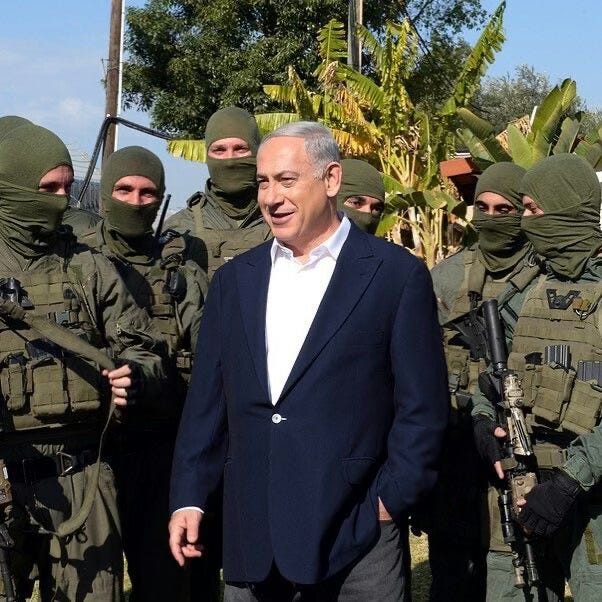
Remaining informed on relationships with foreign entities such as Israel will place the power back into the hands of the average American. With the knowledge Americans can make their opinions heard and petition for change that benefits the public.
*Update: Eisenkot has been appointed to form a new government according to the BBC on Saturday, November 7, 2026. If he is successful in building the new administration he will take on the role as prime minister.
Bio: Stephanie Jean Baptiste is writer and storyteller that covers current events and travel vignettes. She can be found on Instagram @sidequeststephhh and Substack Side quest Steph
Sources:
1. Al Jazeera Staff. “Israel Election Result Shows No Overall Majority as Vote Count Complete.” Al Jazeera, 29 Oct. 2026, www.aljazeera.com/news/2026/10/29/israel-election-result-shows-no-overall-majority-as-vote-count-complete. Accessed 29 Oct. 2026.
Al Jazeera Staff. “Israeli Officials Say Results Stand as Netanyahu Claims Election ‘Stolen.’” Al Jazeera, 2 Nov. 2026, www.aljazeera.com/news/2026/11/2/israeli-officials-say-results-stand-as-netanyahu-claims-election-stolen. Accessed 2 Nov. 2026
The Economist. “Politics, Not Strategy, Could Mean More Israeli Strikes on Iran.” The Economist, 25 Oct. 2026, www.economist.com/middle-east-and-africa/2026/10/25/politics-not-strategy-could-mean-more-israeli-strikes-on-iran. Accessed 27 Oct. 2026.
The Associated Press. “US Strikes Iran Targets in Strait of Hormuz, and Other Mideast News.” AP News, 2 Nov. 2026, apnews.com/article/mideast-news-november-2-2026-8722c8b5a9deb228e7a188d4760ea8ed. Accessed 2 Nov. 2026.
Stewart, Phil. “US Costs of Iran War Rise to Over $47 Billion, According to Pentagon Estimate.” Reuters, 27 Oct. 2026, www.reuters.com/world/middle-east/us-costs-iran-war-rise-over-47-billion-according-pentagon-estimate-2026-10-28/. Accessed 30 Oct. 2026.
Zanotti, Jim. “Israel: Major Issues and U.S. Relations.” Congress.Gov, 2 July 2025, www.congress.gov/crs-product/R44245. Accessed 30 Oct. 2026.
Goldenberg, Sally. “New York City Comptroller Backs off Promise to Invest in Israeli Bonds.” The New York Times, 14 Oct. 2026, www.nytimes.com/2026/10/14/nyregion/mark-levine-comptroller-israel.html. Accessed 30 Oct. 2026.
Pew Research Center. “Iran Conflict Remains Deeply Unpopular as Many Americans Expect It to Go on for Months.” Pew Research Center, 8 Oct. 2026, www.pewresearch.org/short-reads/2026/10/08/iran-conflict-remains-deeply-unpopular-as-many-americans-expect-it-to-go-on-for-months/. Accessed 30 Oct. 2026.
Williams, N. (2026, November 7). Israel president asks opposition leader Eisenkot to form government. BBC. https://www.bbc.com/news/articles/cmy8367lj5xlo
For just $5 a month, you’re directly investing in Black writers, Black ideas, and the future of independent Black media. Every subscription helps us commission original stories, platform new voices, and continue building E.N.D. into a living hub for revolutionary thought, culture, education, and community.
Thank you for helping us build something that belongs to us.