

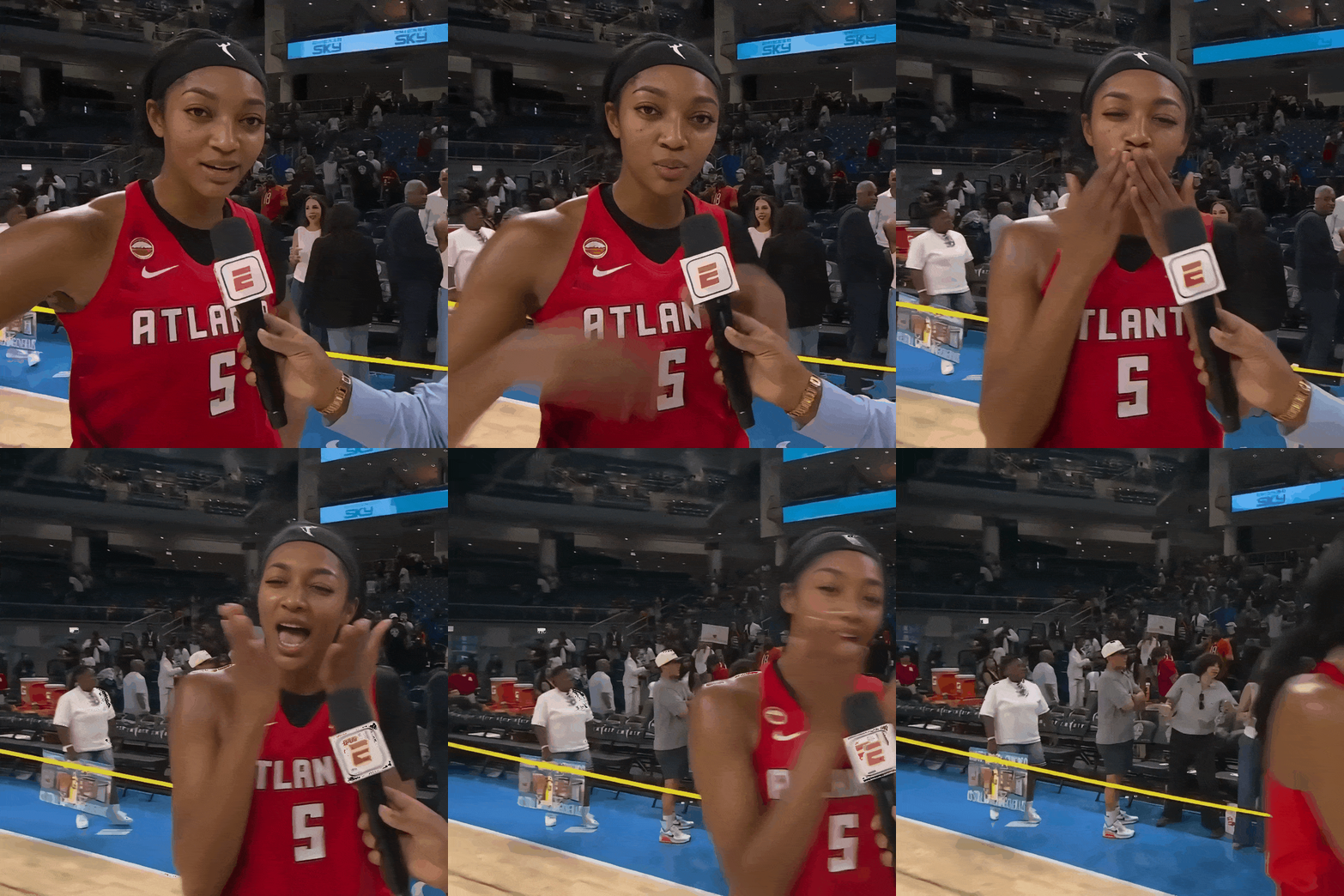
I am not loyal to a WNBA team.
I choose my team based on the percentage of Black people I see on the screen during a game (I’m pro-Black fr). This includes coaches, support staff, and players. Bonus points for Black owners and general managers.
Last year, that led me to the Seattle Storm. This year, I found myself rooting for the Las Vegas Aces and the Atlanta Dream. But the Dream had something the Aces couldn’t offer me: the Deep South.
As the only WNBA franchise in the Deep South, the Atlanta Dream is oozing Blackness. Not the performative kind, like that awful choir song the W ran during finals commercials. I’m talking about the kind of Blackness that celebrates our culture, honors our traditions, and makes us feel at home.
I am a daughter of the Deep South. I have nothing but reverence for my people, my ancestors, and everything we’ve built here. But I’ve learned that not everyone shares that reverence.
When I moved north for college (yes, Howard University is the North), I encountered regional biases I’d never experienced before. For the first time, I heard other Black people speak about Southern Black people as though we were inherently less intelligent, less cultured, or less sophisticated.
To be crystal clear, the belief that Southern Black people are stupid isn’t something I first learned from white folks. Other Black people introduced me to it. And since the rise of social media, I haven’t been able to unsee it.
But ALL you niggas are from the South. Well, at least 98% of you. And many, if not most, of you can trace your lineage back to a Black woman from the South.
A woman who birthed, raised, protected, educated, fed, and loved the generations that eventually made their way north and west.
Yet somehow, the respect has been lost. .
When Cornell faces allegations of mishandling sexual assault, people demand accountability from the institution. When girls make monkey noises outside someone’s door at Ole Miss, suddenly the conversation becomes about why anyone would willingly live in Mississippi.
The South becomes the country’s punchline.
Not at the Atlanta Dream games.
You can see the organization’s love for Black women and Southern Black culture in how it celebrates its players, the composition of its crowds, its social media posts, its themed nights, and even the food.
The Dream is one of the few WNBA teams that has celebrated HBCUs with a dedicated game night. And when I heard “Lift Every Voice and Sing” being performed at a game? Please, girl. I was a goner.
I hadn’t even stepped foot inside the arena, and I was already invested. The love for Black culture felt palpable, even through a screen. So when the Dream made it to the WNBA Finals, I knew I wanted to be there.
My first WNBA game was Game 4 of the Finals. Of course, I cried when my husband suggested we get tickets for our anniversary. What can I say? Favor ain’t fair.
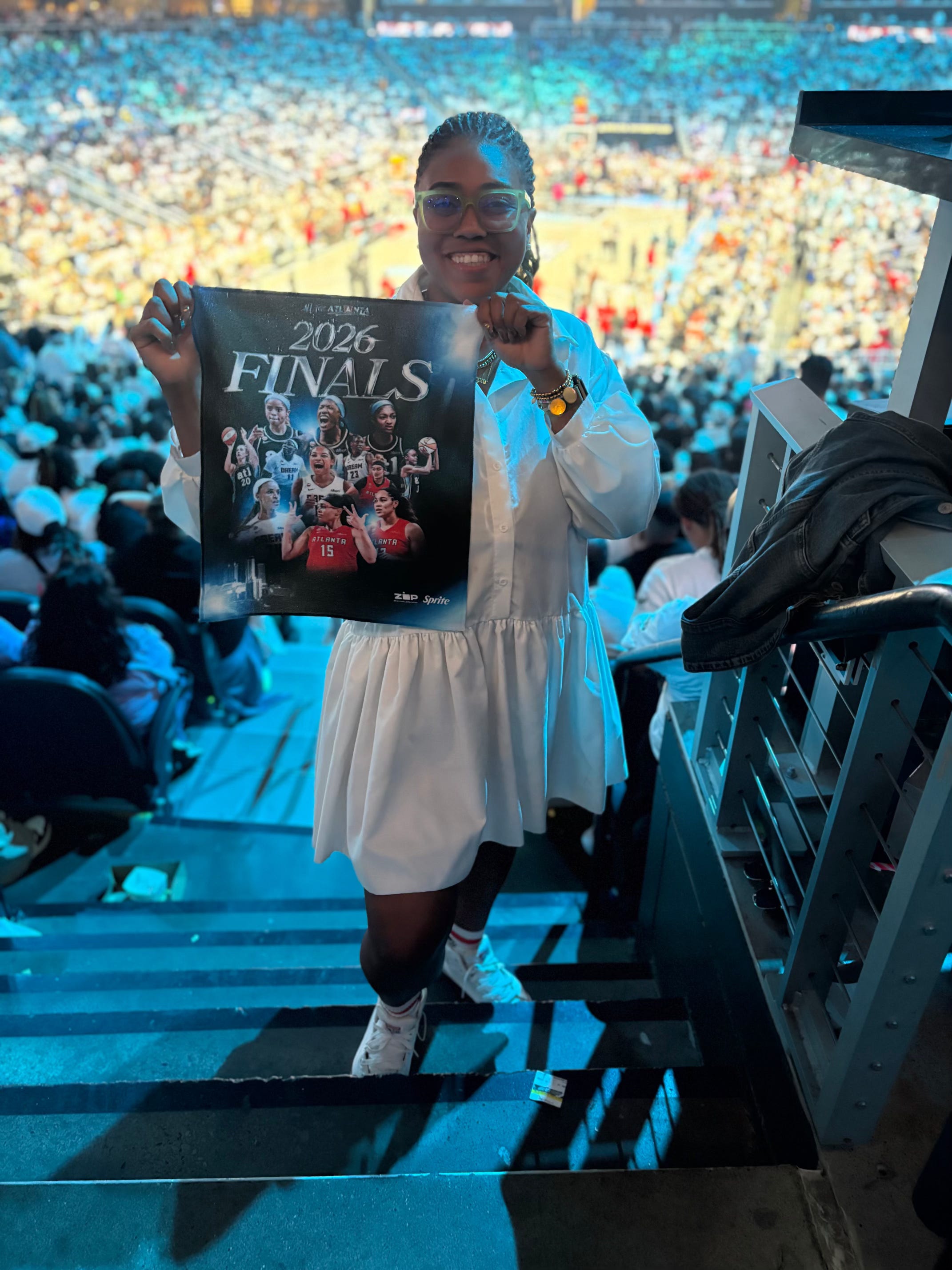
And OF COURSE, I ended up attending on a whiteout night. Because what is more Black than an all-white outfit to close out the summer? (Yes, October is still summer in the South.)
When I finally walked into the arena, the atmosphere was everything I’d imagined. The aunties sat in front of me, behind me, and to one side. The cousins sat next to me, offering unsolicited commentary as we watched, screamed, celebrated, and complained together. Big Boi performed, and the entire arena seemed to know every word. The sucking of teeth. The collective groans. The side-eyes. The very unserious but also incredibly serious attitude of “You have MY free shirt?”
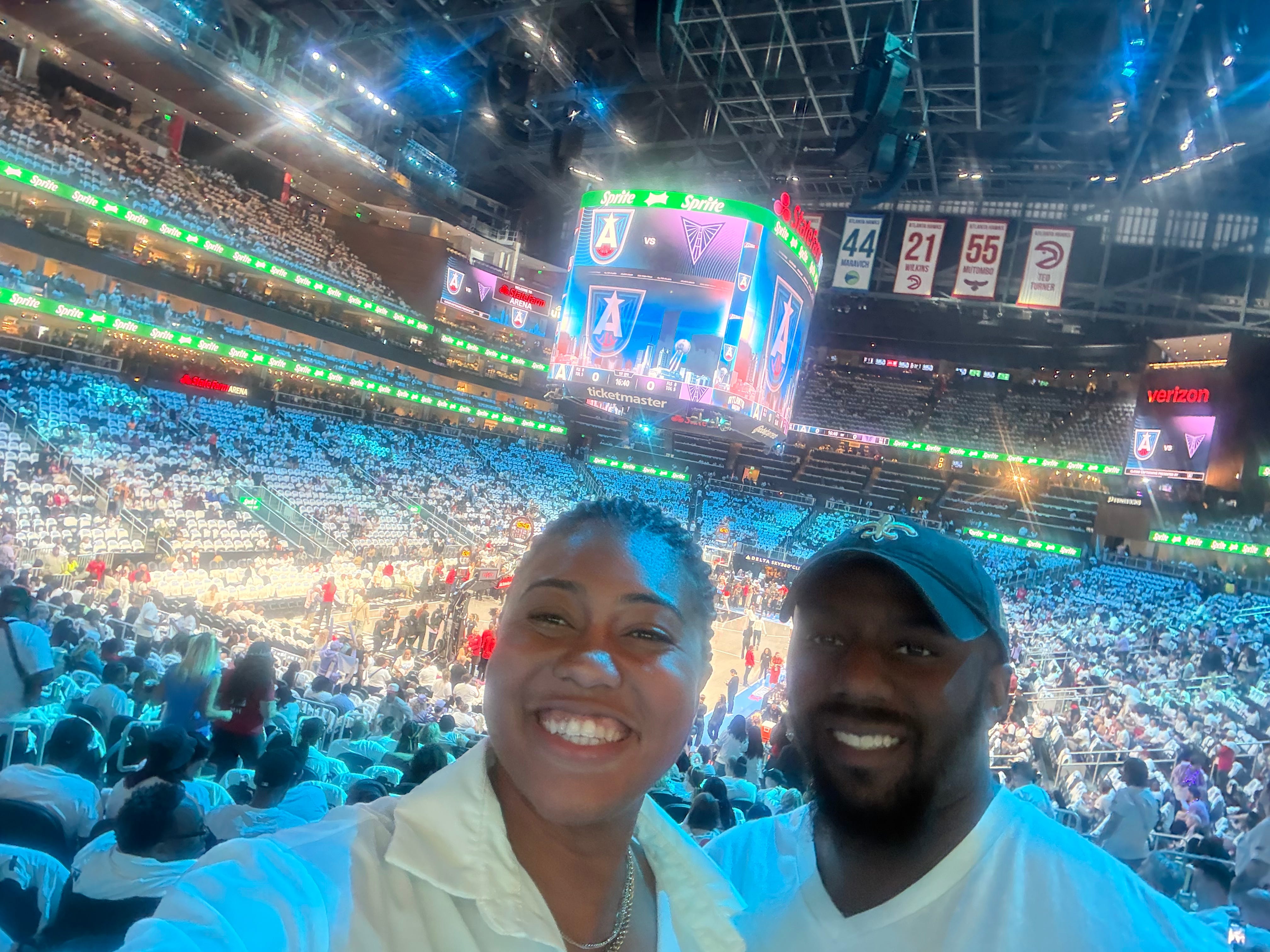
It was all so very Black. And I loved every second of it.
Even when somebody got on my nerves, I couldn’t stay annoyed. I was too happy to be there, too grateful to be surrounded by people who were my home. There was an ease in that arena that I only experience when I’m with my people.
As gentrification continues to transform our neighborhoods and cultural spaces, opportunities to experience that kind of collective Black joy feel increasingly rare. We’re losing places where we can gather without feeling watched, judged, displaced, or expected to make other people comfortable.
We’re watching something similar happen in the WNBA. As the league grows in popularity, the Black women who built its foundation aren’t always receiving the recognition, investment, or leadership opportunities they deserve.
In 2026, a league whose players are predominantly Black women began the season without a single Black woman serving as a head coach. Not one.
Black women have carried this league through years when the cameras weren’t watching, the arenas weren’t full, and the sponsorship dollars weren’t flowing. The league’s growth should create more opportunities for the women who made that growth possible, not fewer.
The Atlanta Dream offers a powerful reminder of what happens when Black women and Black culture are celebrated rather than treated as obstacles to mainstream appeal.
The Dream doesn’t have to choose between growing its audience and honoring the people who have always shown up. Neither does the rest of the league.
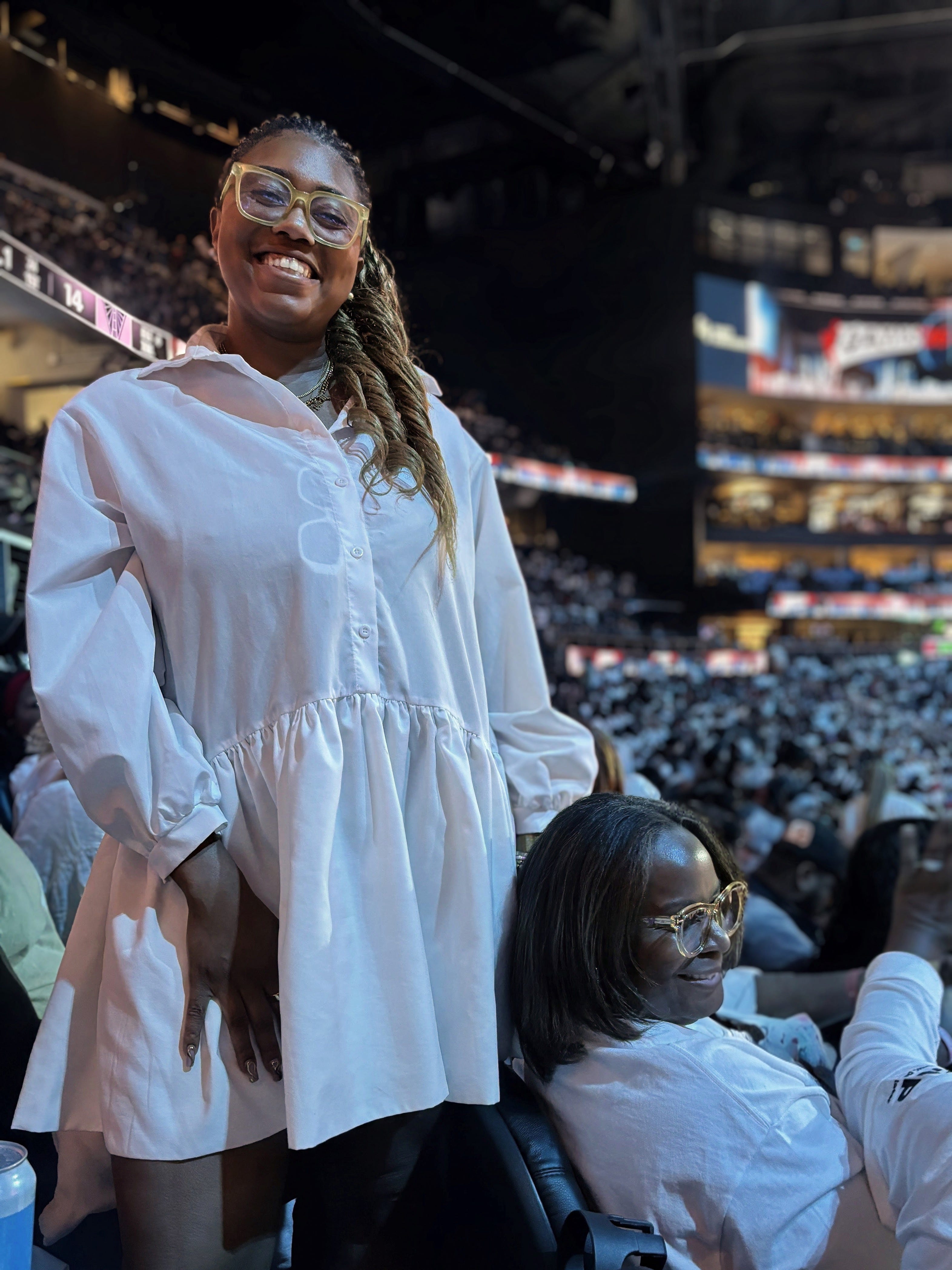
The Dream didn’t win Game 4. They didn’t win the championship, either.
But I left that arena full and overjoyed (no Stevie Wonder)
For me, the magic of the Atlanta Dream isn’t limited to what happens on the court. It’s in the people who fill the seats, the traditions they bring with them, and the freedom to experience Black joy without having to explain why it matters.
Every nigga deserves the Atlanta Dream.
Every nigga deserves to see themselves not just on the court, but in the crowd. To feel safe enough to be loud, joyful, frustrated, ridiculous, and fully themselves.
Julienne Louis-Anderson writes about the intersection of Black culture, Black history, and Black politics. You can find her on all social media platforms @juliennelouisanderson.
For just $5 a month, you’re directly investing in Black writers, Black ideas, and the future of independent Black media. Every subscription helps us commission original stories, platform new voices, and continue building E.N.D. into a living hub for revolutionary thought, culture, education, and community.
Thank you for helping us build something that belongs to us.
I’m from Atlanta—born and raised, BEFORE the FALSE gay rumors. (And I have my birth certificate to prove it)