

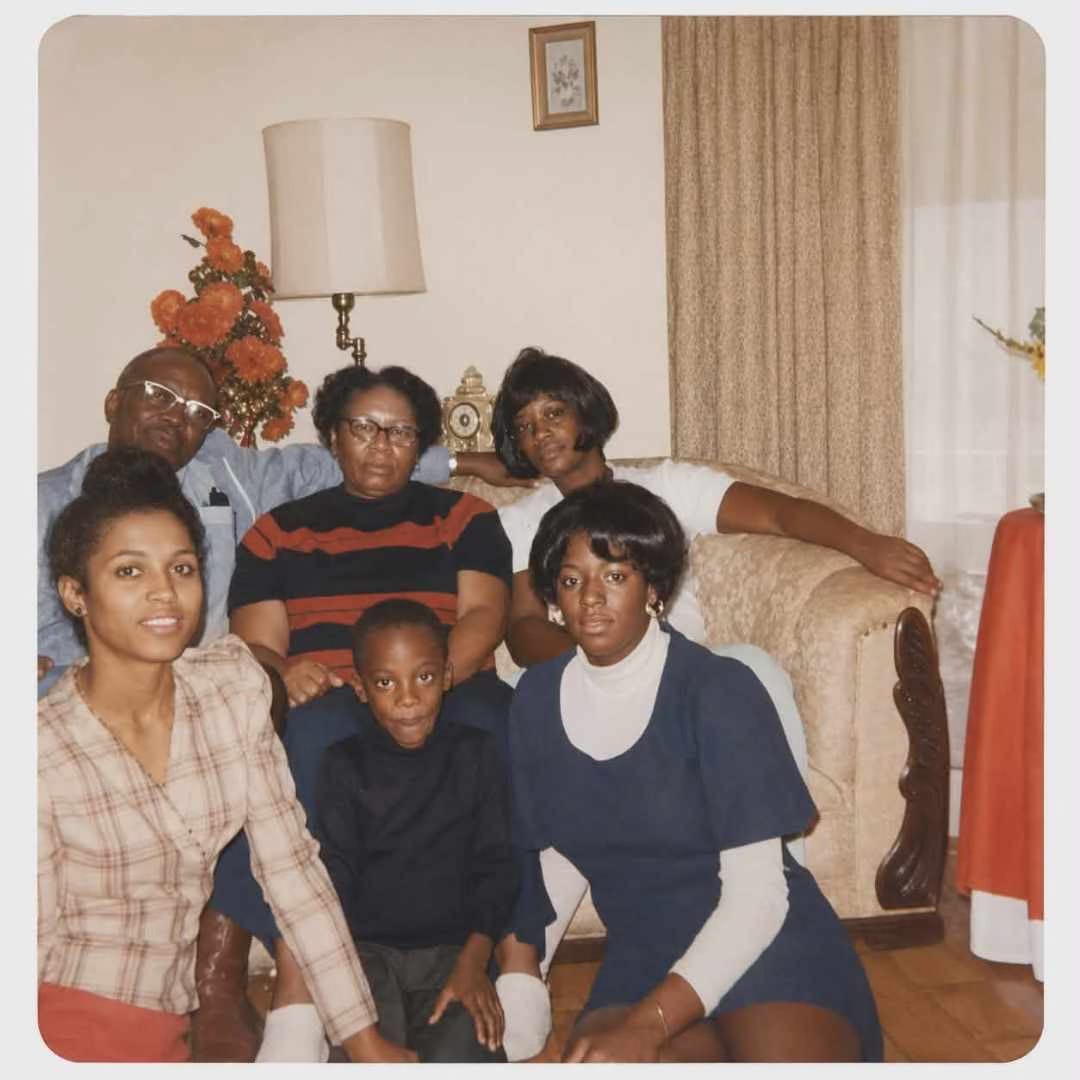
Photo Credit: Belinda Cross
There’s a conversation happening at kitchen tables across Black America right now, and it usually starts with an apology. “I hate to ask, but...” A daughter calling her mother about moving back in. A brother asking a brother about splitting rent. Two cousins wondering aloud whether they could qualify for a mortgage together that neither could get on their own.
But in my family, I never needed an apology.
Where I come from, moving in wasn’t a confession of failure. It was a move on the board.
Before we talk about housing, I want to ask the question this essay is about: Who taught us that independence is the highest form of achievement?
I’m a millennial, so I can tell you exactly where my generation heard it. We had an anthem. Webbie gave us “Independent” — a song so committed to the idea that it spells the word out letter by letter, just to make sure it sticks. And it stuck. The song is as popular today as it was then, still filling dance floors nearly two decades later, still preaching the same gospel: handle everything yourself, need nobody, and that’s when you’ve made it. The music didn’t invent the message — it amplified a definition of success America had been selling for decades. One person. One paycheck. One address. Maximum distance from your people.
Radical independence is not just outdated; it’s financially dangerous. The way out is actually a way back.
Fourteen People, One Townhouse
In the 1990s in Washington, DC, fourteen people in my family, four families in all, lived together in a single townhouse. Inside the house, it was something else entirely: an economy. Meals were cooked for everyone, so nobody had to pay for four separate kitchens. Children were watched by whoever was an adult at home, so nobody lost income to childcare. Rides were shared, bills were pooled, and when one family hit a rough month, the other three absorbed the shock before it could become a crisis. Nobody was independent. Everybody was covered.
Within two to three years, each of those four families purchased and maintained a home of their own — all of them. The townhouse wasn’t a landing pad; it was the launchpad.
The launchpad turned into a system. When my mother and grandmother purchased our family home in the Maryland suburbs, they bought it the same way the townhouse had operated: as a collective. Shared purchase, shared responsibility, shared burden. If the water heater went out or a payment came up short, no single person carried it alone.
That home came with a standing policy, understood by everyone: If we had room, and you needed somewhere to lay your head, and — this part mattered — you had a plan of action, the door was open.
When my older brother graduated from high school, a younger cousin moved into his room. When I graduated and left for college, more family members moved in behind me: one out, one in. The house never sat idle, and nobody staying there was idle either. My family even extended the policy to my friends — young men who needed a place to stay, stayed, saved, and walked out of our house into their first homes.
And what worked for my family in the 1990s hasn’t gone out of date. Look at today’s conditions, and her model stops reading like history and starts reading like a forecast.
The Weather Report
Black homeownership fell to 43.9 percent in mid-2025, its lowest point in nearly four years and the steepest year-over-year drop this decade. The gap between white and Black homeownership now stands at nearly 30 percentage points. Among Black Gen Z adults, only about 14 percent own a home, and Black unemployment has climbed past 7 percent. For young Black workers with a high school education, it’s approaching one in five.
As for Washington, the same government has moved to shrink HUD, dismantled the Consumer Financial Protection Bureau — the referee created because lenders have a documented history of cheating people who look like us — and imposed tariffs that add an estimated $17,500 to the cost of building a new home.
None of that is within your control. My family understood that in a DC townhouse thirty years ago.
Unlearning the Shame
So why does the kitchen-table conversation still start with an apology? Because we’ve adopted a white and Eurocentric view.
Across most of the world, from Lagos to Mexico City to Mumbai to Seoul, multiple generations under one roof is not a crisis. It is the default architecture of family life. America’s ideal — one nuclear family, one detached house, one mortgage — is a historical anomaly, barely three generations old, built on cheap land, cheap credit, and government-backed loans that were explicitly denied to Black families through redlining and restrictive covenants. We were locked out of the subsidy, taught to measure ourselves against its results, then told our distance from it was a personal failing.
Our grandparents pooled — because they had to, and because they knew how. Our parents aspired — a good life came to mean getting the children up, out, and away. And by the time the idea reached us, independence was no longer a strategy or even an aspiration. It was an identity.
Success meant your own place, your own bills, your own struggles handled quietly and alone. We began measuring progress in distance — the farther you landed from home, the better your family must have done — until needing your people, the very thing that carried us through everything, became the thing we were most ashamed of.
Reclaiming the village is about more than saving money.
It’s about reclaiming a philosophy of family — the understanding that a household is the first institution we ever built and the most reliable one we’ve ever had.
The extended household was never our failure. It was our technology. The village raised the children, pooled the wages, kept the elders housed, and financed the businesses when no bank would. Black families didn’t survive Jim Crow on individual credit scores. They survived on collective capacity.
My doctoral research on Black entrepreneurs revealed the same pattern again and again: those who endured systemic barriers didn’t wait for the system to change. They started with what they controlled — their skills, their relationships, their communities — and built from there. Scholars call it effectuation: begin with your means, not your wishes. It applies to a household exactly as it applies to a startup.
What We Control
Merged households need rules, the way businesses need standard operating procedures and contracts. Write your version down. Who pays what, who does what, what the money is for, and what the exit looks like. Treat the household like the enterprise it is — because it is one. The family is the first firm any of us ever belongs to. Mine happened to be a firm that produced homeowners.
While we do that, make sure to do the policy-level work: Vote. Mobilize. Organize. Demand a housing agenda that treats shelter as infrastructure rather than an asset class. But do not put your family’s survival on layaway while you wait for Washington to develop a conscience.
Webbie gave us the anthem for going it alone. My grandmother gave us a better one. She just never had to spell it out.
Cordaro M. Davis, EdD, is an entrepreneur, restaurateur, and adjunct professor of business in Los Angeles. His doctoral research at Pepperdine University examined the adaptive strategies of Black entrepreneurs navigating systemic barriers.
Instagram: @cordaro4u Substack: @cordarodavis
Sources referenced: Redfin/U.S. Census Bureau homeownership data (Q2 2025–Q4 2025); Federal Reserve Bank of St. Louis (FRED); Economic Policy Institute, State Unemployment by Race and Ethnicity (Q1 2026); Bureau of Labor Statistics; Joint Center for Political and Economic Studies, State of the Dream 2026; National Association of Realtors, 2025 Snapshot of Race and Home Buying in America.
For just $5 a month, you’re directly investing in Black writers, Black ideas, and the future of independent Black media. Every subscription helps us commission original stories, platform new voices, and continue building E.N.D. into a living hub for revolutionary thought, culture, education, and community.
Thank you for helping us build something that belongs to us.
I’ve always been team “get this girl out of my house” but this reframe definitely supports a more holistic ideal to independence.
"Webbie gave us the anthem for going it alone. My grandmother gave us a better one. She just never had to spell it out." SWEAR TO GOD THIS THE LINE THAT IM BEATING MY FIST TO MY CHEST TO! beautifully written and incredible shout to grandma for having the only blueprint we need!