


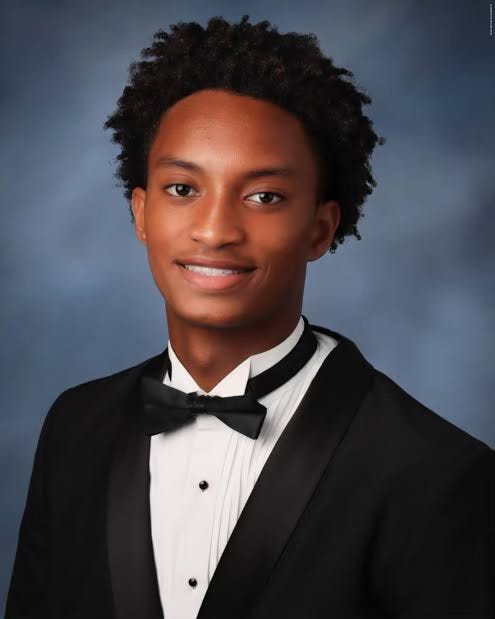
This essay is written in the form of a letter. It is steeped in a Black literary tradition of bringing one’s most intimate thoughts and feelings to the page. I hope, gentle reader, you allow grace for the wandering ways in which I attempt to bear witness to yet another Black tragedy.
Dear Nolan,
Hey Buddy. I didn’t know you personally, but as you know, Black folks have a way of creating family beyond blood. A kind of fictive kinship connects us, and seeing you made me feel like you could’ve been one of my own nephews.
I have selfishly attempted the impossible task of avoiding the news surrounding your passing. Maybe it’s because the wounds are still fresh from the passing of my own nephew we lost a year ago. He was your age, and like you, he was beautiful and filled with life. Maybe I knew there was only so much grief I could hold.
I think, though, I finally understood what I had been avoiding when my wife shared the news that there would be no indictment. The feeling I had been trying to suppress wasn’t sadness or despair, although I’ve wavered between both since the news of your loss. It was something deeper. More terrifying. More difficult to heal. Rage.
James Baldwin knew something about that rage. Writing about his father’s death and his own struggle to live as a Black man in America, he observed, “To be a Negro in this country and to be relatively conscious is to be in a state of rage almost, almost all of the time.” I understand that differently now, nephew. Seeing clearly is a burden. In loving a country while knowing what it is capable of doing to people who look like you. Like me. Like my children. Like my nephew.
We still don’t know the full truth surrounding your death. Various stories have implicated various people, and the details are murkier than the shores where you were found. Your so-called “friends” seemed more interested in absolving themselves of wrongdoing than helping your family understand what happened. A young woman you met on the lake that day came under scrutiny. She only knew you briefly, but I imagine she saw something in you that day too. That same light I see when I look at your pictures.
And then people blamed your parents. That part has stayed with me. “Why would they live in Mississippi?” It’s their home. “Did they give him the talk?” Of course they did. As parents of Black children, we know the talk. We know all the talks. Where you can go. What you should wear. How you should respond. What to do when someone follows you. What to do when the police stop you. When to speak. When to stay quiet. How to make yourself smaller when somebody else decides your presence is too large. As if there is some perfect combination of warnings that can keep a Black child safe. As if your parents could have loved you so carefully that the world would have been forced to love you too.
I know better. I have seven beautiful Black children myself, nephew. Two of them are your age. No matter how old they get, I still see their past selves. I see the babies I held. The little kids running through the house. The missing teeth. The scraped knees. The laughter. The questions. The innocence. Sweet. Beautiful. Full of life. Just like you. But I know the world can see something different. Dangerous. Threats. Promiscuous. Licentious. Disposable. That terrifies me.
My greatest challenge as a parent to Black children is figuring out how to raise them for a world that should be, while preparing them for the world that is. I don’t think I’m doing it right. Some days I want to tell them to be fearless. Other days I want fear to keep them alive. I want them to explore. I want them to travel. I want them to fall in love. I want them to make mistakes. I want them to be loud. To take up space. To go to the lake with their friends and come home late with stories they probably won’t tell me until they’re thirty. I want them to be free. And then I remember you. And suddenly freedom feels like something I am terrified to give them.
That is the impossible task your parents faced too: raising a FREE Black son in a country that has so often tried to extract every bit of our humanity. So I refuse to blame them. I offer them grace.
You were a son of the South, Mississippi to be exact, so I imagine you heard the story of another boy whose name became larger than the life he was allowed to finish living. Emmett. He was beautiful too. Full of life too. A boy who should have had the privilege of growing older. Instead, we remember him because the world would not let him simply be a boy.
I hate that I am writing your name anywhere near his. I hate that Black people have become so practiced at turning our dead into lessons. I hate that after someone like you is gone, we begin asking what your death can teach us. We search for meaning. We organize. We march. We write. We build something from the wreckage because that is what our people have always done. But nephew, sometimes I don’t want a lesson. Sometimes I just want you to still be here. I want your parents to have their son. I want the people who loved you to hear your laugh again. I want you to have been given the ordinary privilege of getting older.
What do we do when we don’t get that? Our people have been called resilient for generations. There is truth in that. We have made beauty in places designed to break us. We have built families, churches, schools, movements, neighborhoods, and whole worlds out of what we were given. But resilience has a cost. And I am tired of Black people having to pay it.
Right now, nephew, I have no prescriptions for hope, and I do not apologize for it. Right now, all I feel is rage. But I have been thinking about what I owe you if I am going to carry that rage. Because rage can consume a person. It can make me hard. It can convince me that loving anything in this world is foolish because everything we love can be taken from us. I cannot let it do that.
So maybe my responsibility is not to stop being angry. Maybe my responsibility is to decide what my anger will make of me. I can let it make me afraid for my children, or I can let it make me more intentional about loving them while they are here. I can hug them longer. Listen when they tell me the stories I’m too busy to hear. Remind them that they are worthy before the world gets another opportunity to tell them otherwise. I can teach them about this country without teaching them to hate themselves within it. I can prepare them for the world that is without convincing them that the world as it is must remain this way.
I can make sure they know that being Black is not simply something they must survive. It is something beautiful. Something sacred. Something free. I can love my wife. I can love my children. I can love my community. I can keep showing up for young people who aren’t mine by blood but become nieces and nephews anyway. I can fight for a world where their parents don’t have to rehearse every danger before allowing their children to live. And somehow, with all its faults, I can continue loving my country enough to demand more from it.
Baldwin wrote, “Love takes off the masks we fear we cannot live without and know we cannot live within.” Maybe that is the work. Not choosing love instead of rage. Choosing to love through it.
Loving you means refusing to let the circumstances of your death become the entirety of your life. It means remembering that before you became a headline, a case, a question, or another name people spoke while demanding answers, you were somebody’s baby. You were somebody’s friend. You were here. And you were loved.
So, dear nephew, I lay down these words in your memory, not to find closure. I don’t have closure to offer. I don’t have easy hope either. What I have is a vow. I will carry the rage. But I will not let it take my love.
I will love my children fiercely enough to prepare them for this world and stubbornly enough to believe they deserve another one. I will love my community enough to keep showing up. I will love our people enough to grieve every life without accepting that our grief is inevitable. And I will love you, nephew, I never knew, by refusing to let silence have the final word.
For you. For my nephew. For Emmett. For all our children.
Rest well, Nolan. Until we meet again.
With Love,
Uncle Tré
This was deeply felt. My body cried, though my tears wouldn’t escape due to the rage that is shared. Thank you for speaking for all of us. Aunties all over share the same sentiments.
simply standing heartfelt,praying for change.